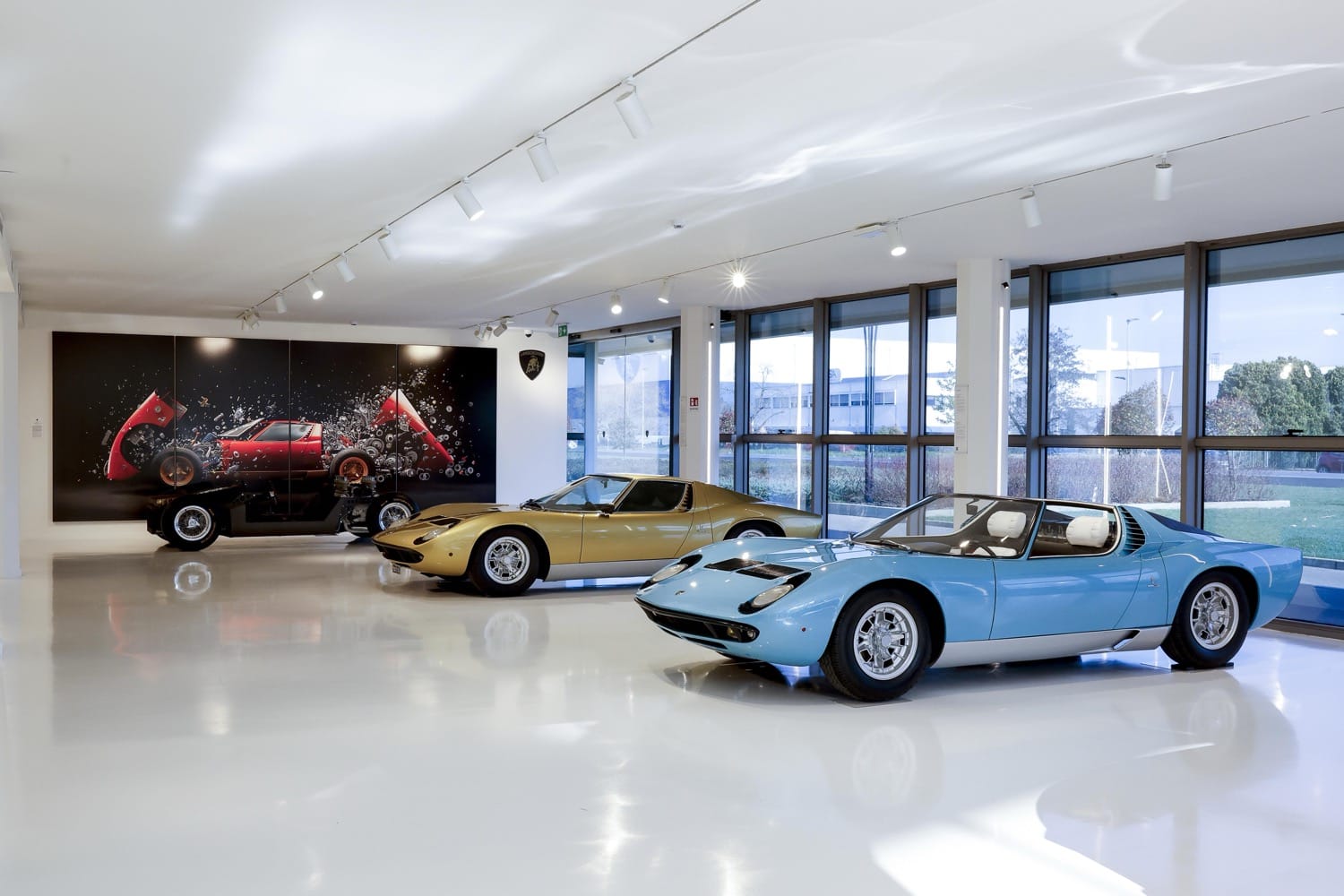
Lamborghini Miura: the legend celebrates its 60th anniversary
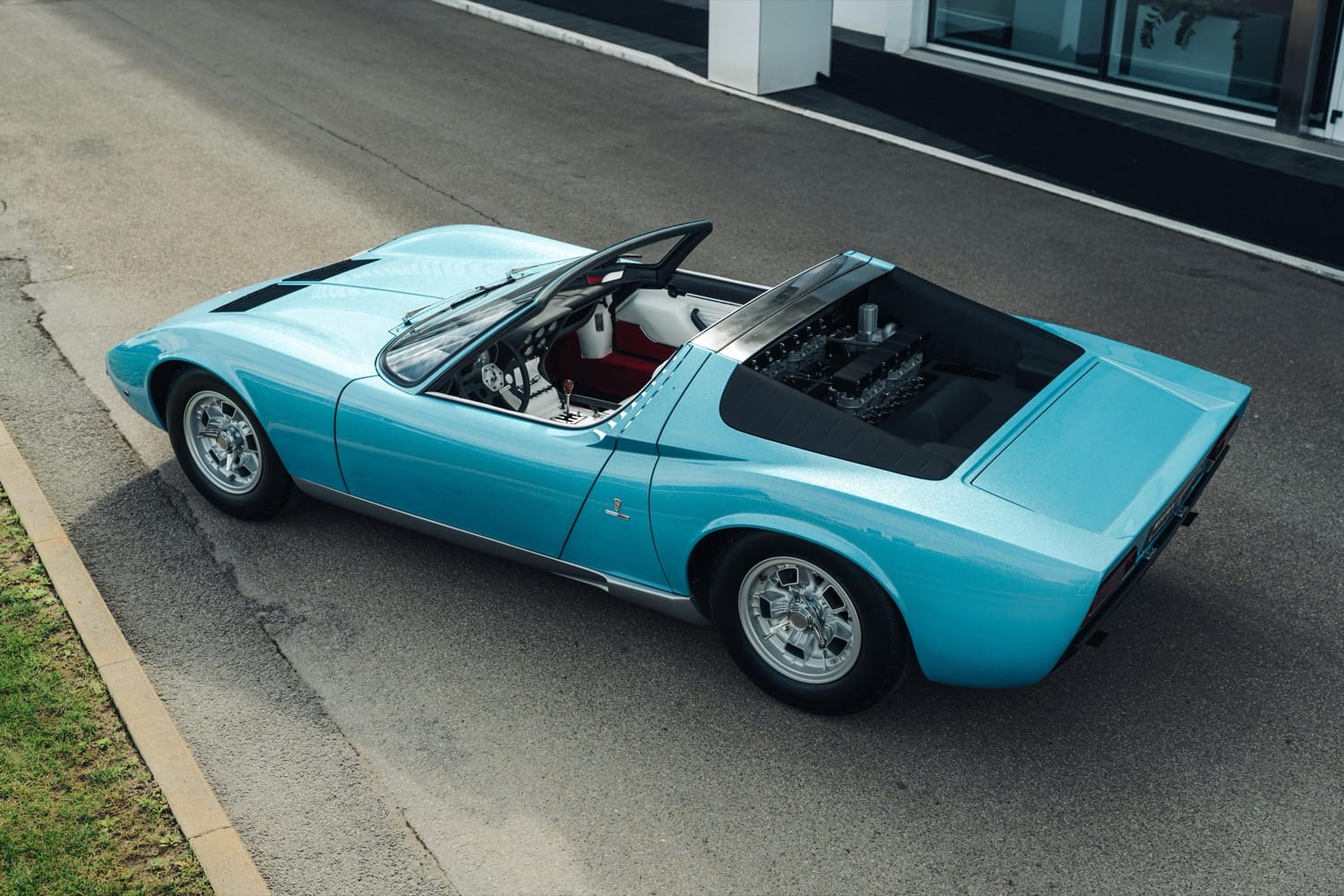
Presented in 1966 at the Geneva Motor Show, the Lamborghini Miura profoundly marked the history of the automobile. More than just a new model, it redefined the codes of the sports car by introducing a technical architecture and a design that broke with the standards of the time.
AN ICONIC SUPERCAR WITH REVOLUTIONARY DESIGN AND PERFORMANCE
Produced between 1966 and 1973 in 763 units, the Miura was available in several versions (P400, P400 S, P400 SV), powered by a rear mid-mounted V12 producing up to 385 hp. A true pioneer, it laid the foundations of the modern supercar and continues to inspire Lamborghini models today.
LAMBORGHINI MIURA: A TECHNICAL AND STYLISTIC REVOLUTION
From its unveiling, the Miura embodied a new vision of the sports car. Developed by a young team of engineers led by Gian Paolo Dallara and Paolo Stanzani, it adopted an architecture directly inspired by racing: a transversely mounted V12 engine in a rear mid-engine position. This unprecedented technical choice for a road car transformed weight distribution and delivered performance levels never seen before at the time.
As the brand’s third model after the 350 GT, the Miura quickly established Lamborghini’s identity: boldness, innovation and a determination to push boundaries. Its lightweight tubular chassis, combined with a powerful powertrain, enabled it to reach levels of speed and acceleration that placed the Miura among the fastest cars of its era.
Beyond its performance, it introduced a new segment: rear mid-engine supercars. An architecture that has since become a benchmark in the industry. Sixty years after its launch, the Miura remains an icon, both for its technical approach and its lasting influence on automotive design and popular culture.
DESIGN, POWERTRAIN AND PERFORMANCE OF THE LAMBORGHINI MIURA
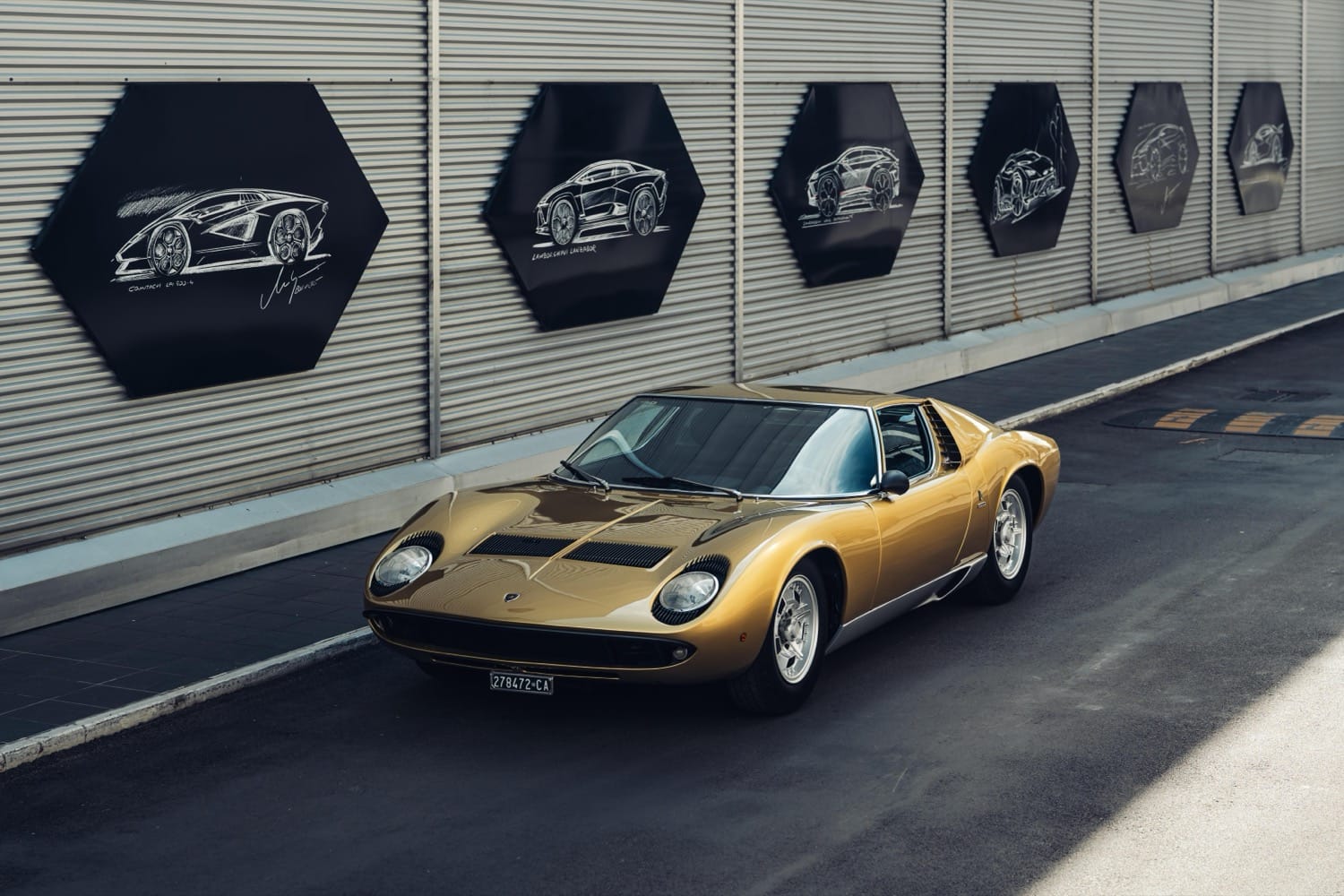
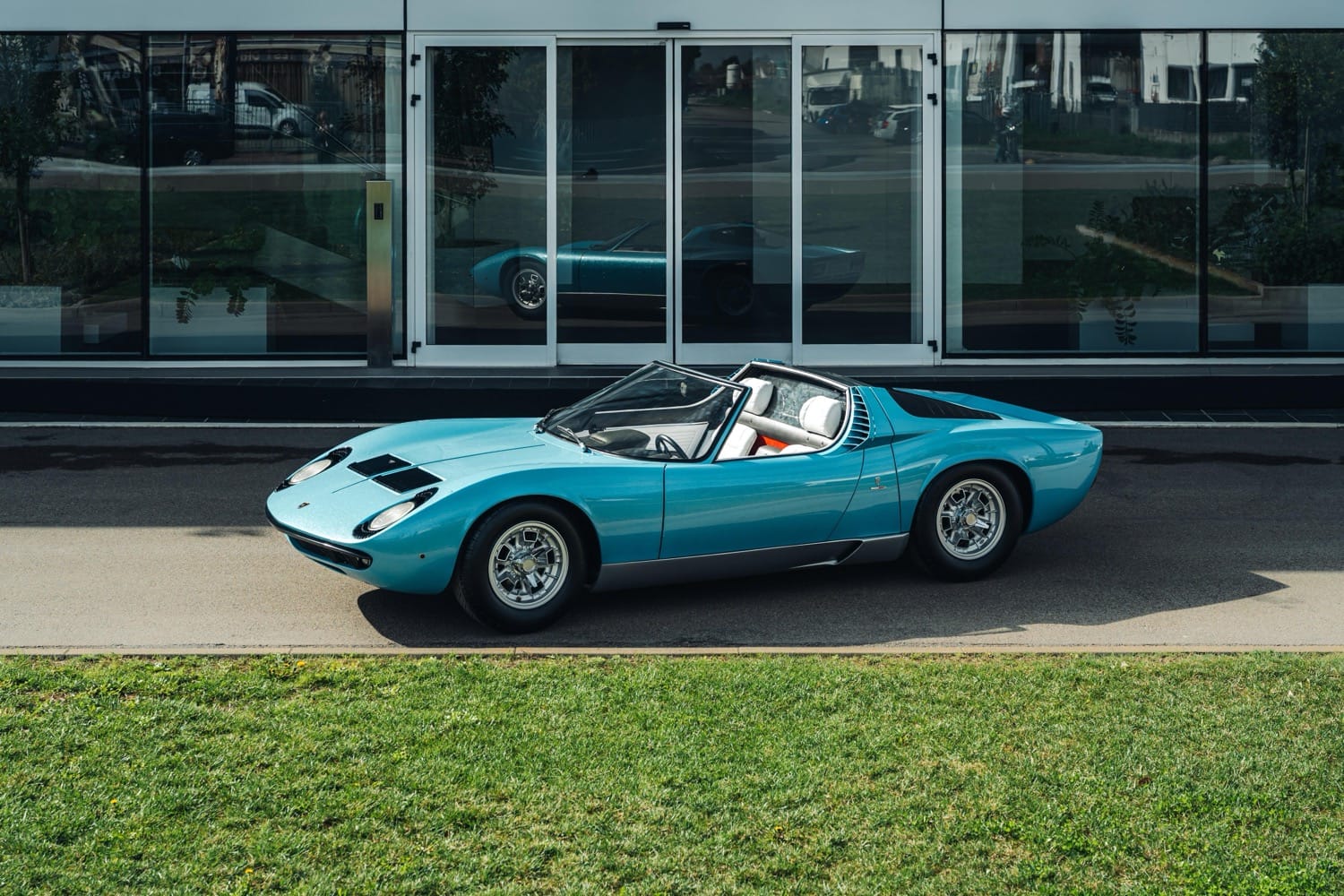
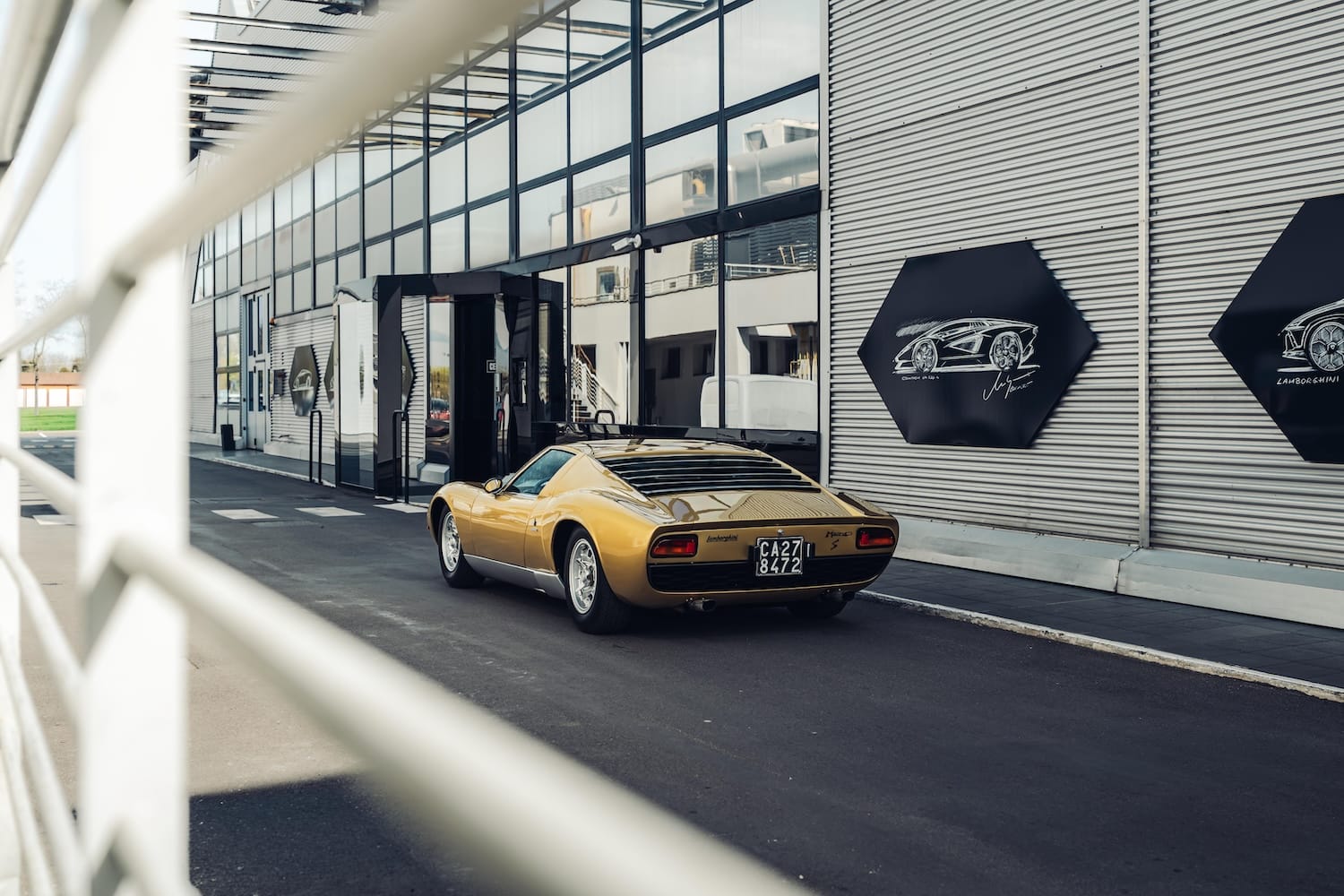
The design of the Lamborghini Miura, created by Carrozzeria Bertone under the direction of Marcello Gandini, immediately set a new aesthetic benchmark. With its low silhouette (around 105 cm in height), flowing lines and compact proportions (4.36 m long), it combines elegance and aggression. Pop-up headlights, the famous “eyelashes” around the headlamps and the side air intakes contribute to an instantly recognisable visual identity.
Under the bonnet, the 3.9-litre V12 engine evolved across the different versions. The Miura P400 produces 350 hp, the P400 S reaches 370 hp, while the P400 SV peaks at 385 hp. This powertrain allows the Miura to achieve remarkable performance, with a top speed approaching 290 km/h, making it one of the fastest production cars of its time.
The engine, gearbox and differential initially shared a single housing, a bold technical solution to optimise packaging. Combined with a rigid chassis and double wishbone suspension, this configuration delivers precise and engaging handling, true to the Lamborghini spirit.
TECHNOLOGY, EQUIPMENT AND COMFORT
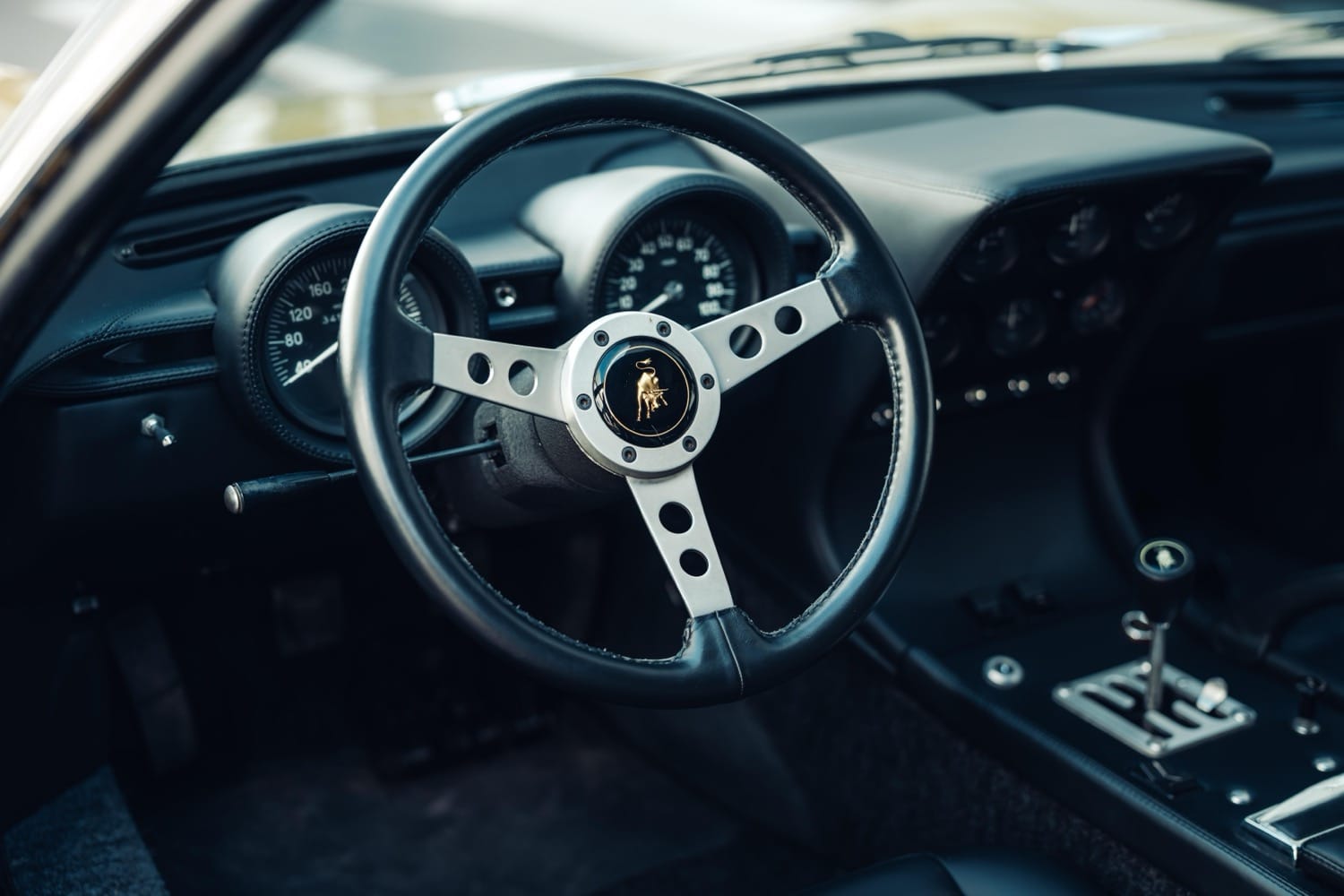
Inside, the Lamborghini Miura reflects the approach of the 1960s: a pure driving experience focused on the driver. Free from modern electronic assistance, it offers a direct connection with the mechanics. Unassisted steering, an open-gate manual gearbox and immediate feedback create a demanding yet highly immersive driving experience.
The cabin, carefully designed, combines leather, full analogue instrumentation and driver-oriented ergonomics. The various evolutions of the model, particularly in the P400 S version, introduced improvements in comfort and finish, with more refined equipment and greater attention to detail.
The Miura also offered a wide range of body colours, often vibrant and expressive, allowing customers to personalise their vehicle long before this approach became standard in the automotive industry.
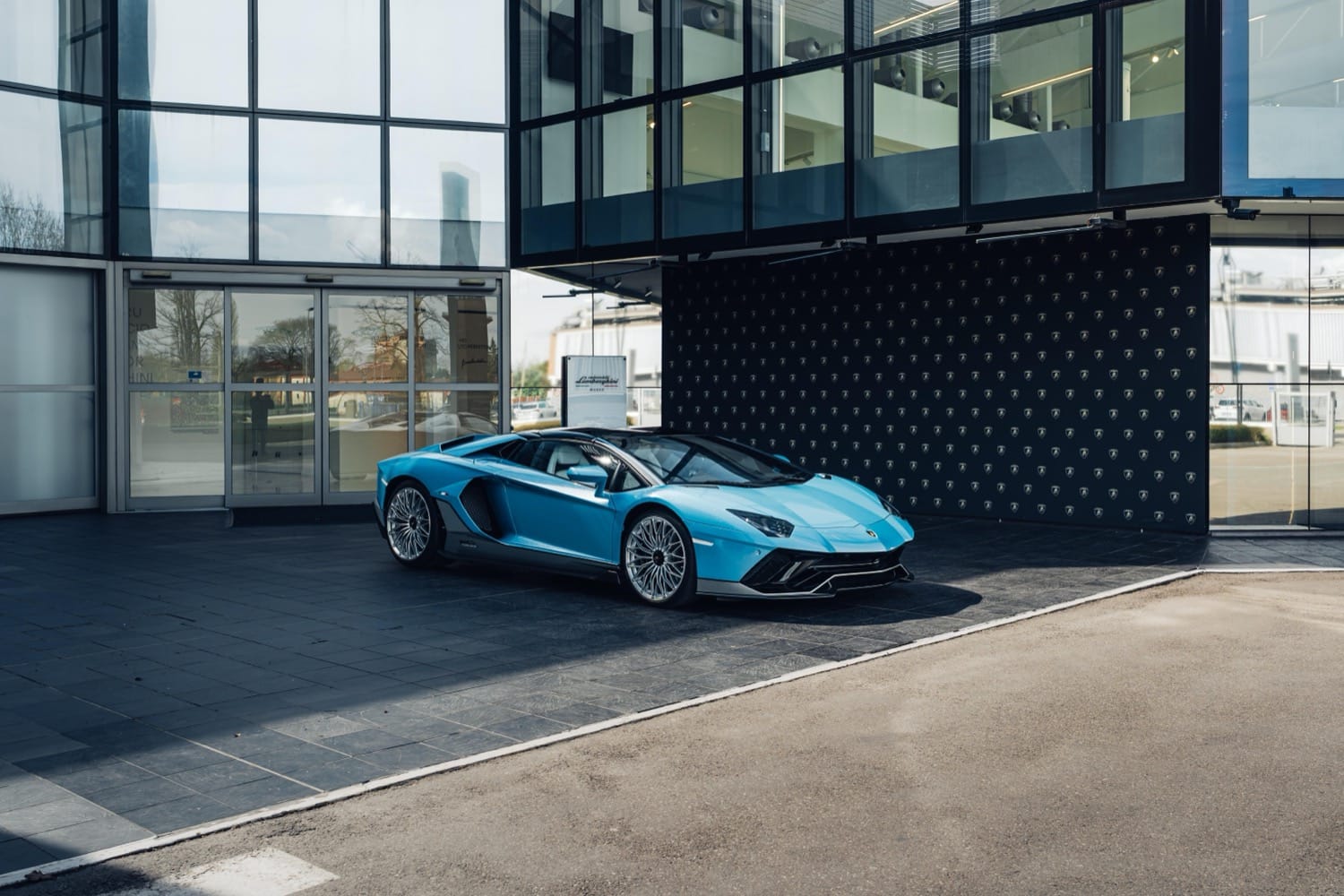
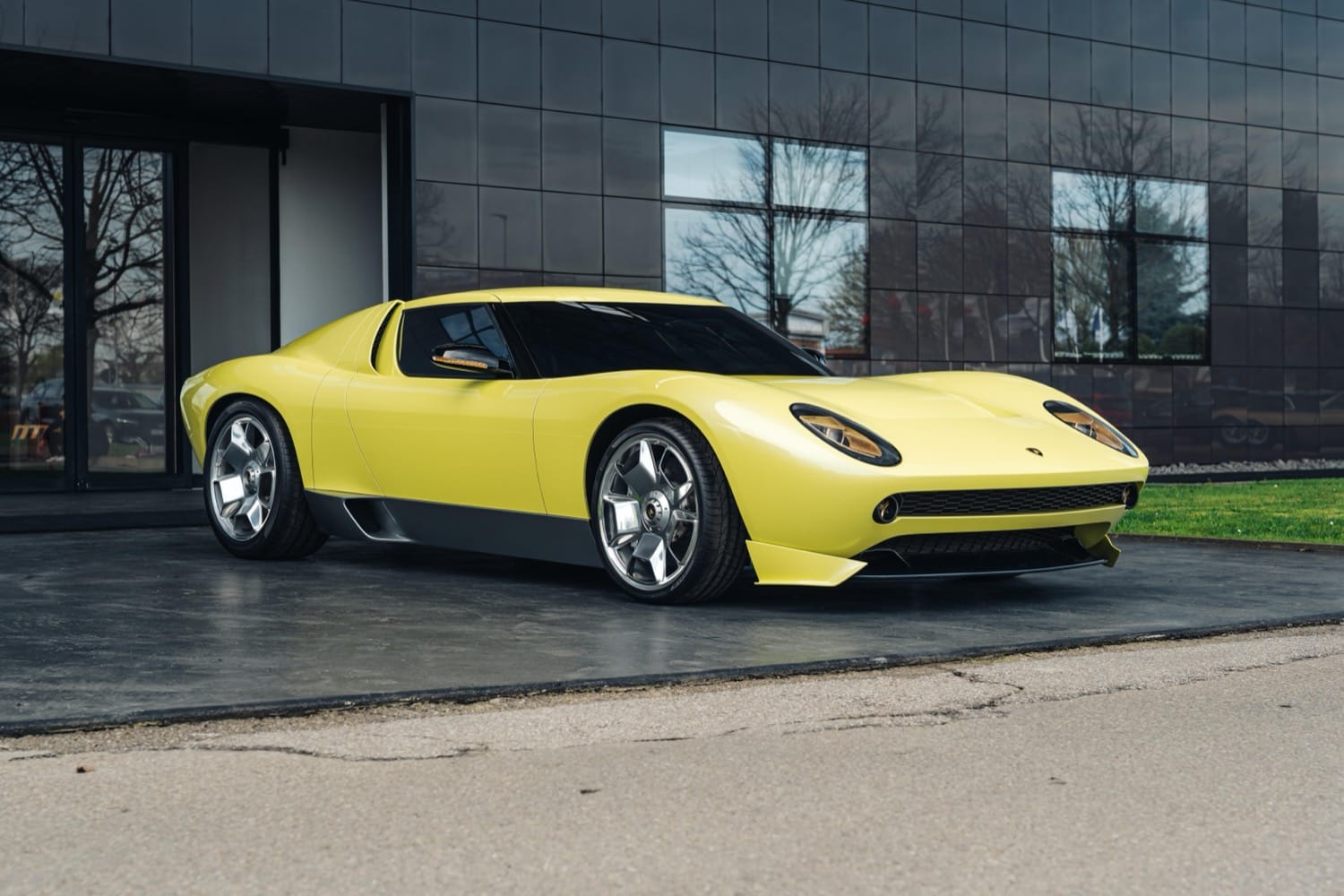
Today, the Miura remains a benchmark in design and engineering. Its influence can be seen in contemporary Lamborghini models, from the Countach to the Revuelto. Restored and certified by the Polo Storico department, it continues to captivate collectors and enthusiasts, confirming its status as a timeless automotive icon.