


Monaco and the automobile exhibition: exceptional cars to discover at the Grimaldi Forum
From the first Monaco Grand Prix held in the streets of the Principality in 1929 to the triumphs of the most iconic Formula 1 single-seaters and rally cars, Monaco’s history is closely linked to that of the automobile. The exhibition “Monaco and the automobile”, presented at the Grimaldi Forum from 1 July to 6 September 2026, invites visitors to explore nearly a century of technical innovation, sporting achievements and exceptional creations. Among the models on display are major witnesses to this adventure: the Bugatti Type 35B, winner of the very first Monaco Grand Prix, the Alfa Romeo 158 “Alfetta”, which dominated the early years of the Formula 1 World Championship, the Fiat 131 Rally, which conquered the roads of the World Rally Championship in the late 1970s, as well as the prestigious Bugatti Type 46 “Toutalu”, a remarkable synthesis of elegance, innovation and craftsmanship.
Through these exceptional automobiles and many other historic pieces, the exhibition retraces the evolution of a passion that has shaped Monaco’s identity and helped make the Principality one of the world’s great centres of motorsport.
Bugatti Type 35B
On 14 April 1929, the Monaco Grand Prix entered history with its first edition, held on a street circuit laid out through the streets of the Principality. Created by Antony Noghès, with the support of Prince Louis II and the Automobile Club de Monaco, the race stood apart from other Grands Prix of the period, which were held on permanent circuits.
The race mainly opposed a powerful Mercedes-Benz SSK and a large Bugatti contingent. Taking advantage of regulations that no longer limited engine capacity, the Alsatian manufacturer entered several models, including Type 35C cars and the more powerful Type 35B versions fitted with supercharged engines. Among the eight Bugattis on the starting grid were those driven by William Grover, known as “Williams”, Georges Bouriano, Philippe Étancelin and René Dreyfus.
The fight for victory centred on Williams, driving a Bugatti Type 35B, and the German Rudolf Caracciola in a Mercedes-Benz SSK. Despite the power of his car, which was not well suited to Monaco’s narrow streets, Caracciola had to settle for third place. Williams ultimately won ahead of Bouriano, giving Bugatti victory in this historic first edition of the Monaco Grand Prix.
Beyond his sporting achievements, William Grover would also leave his mark on history through his involvement in the Resistance during the Second World War. An agent of the Special Operations Executive, he was arrested in 1943 and executed at Sachsenhausen camp in March 1945.
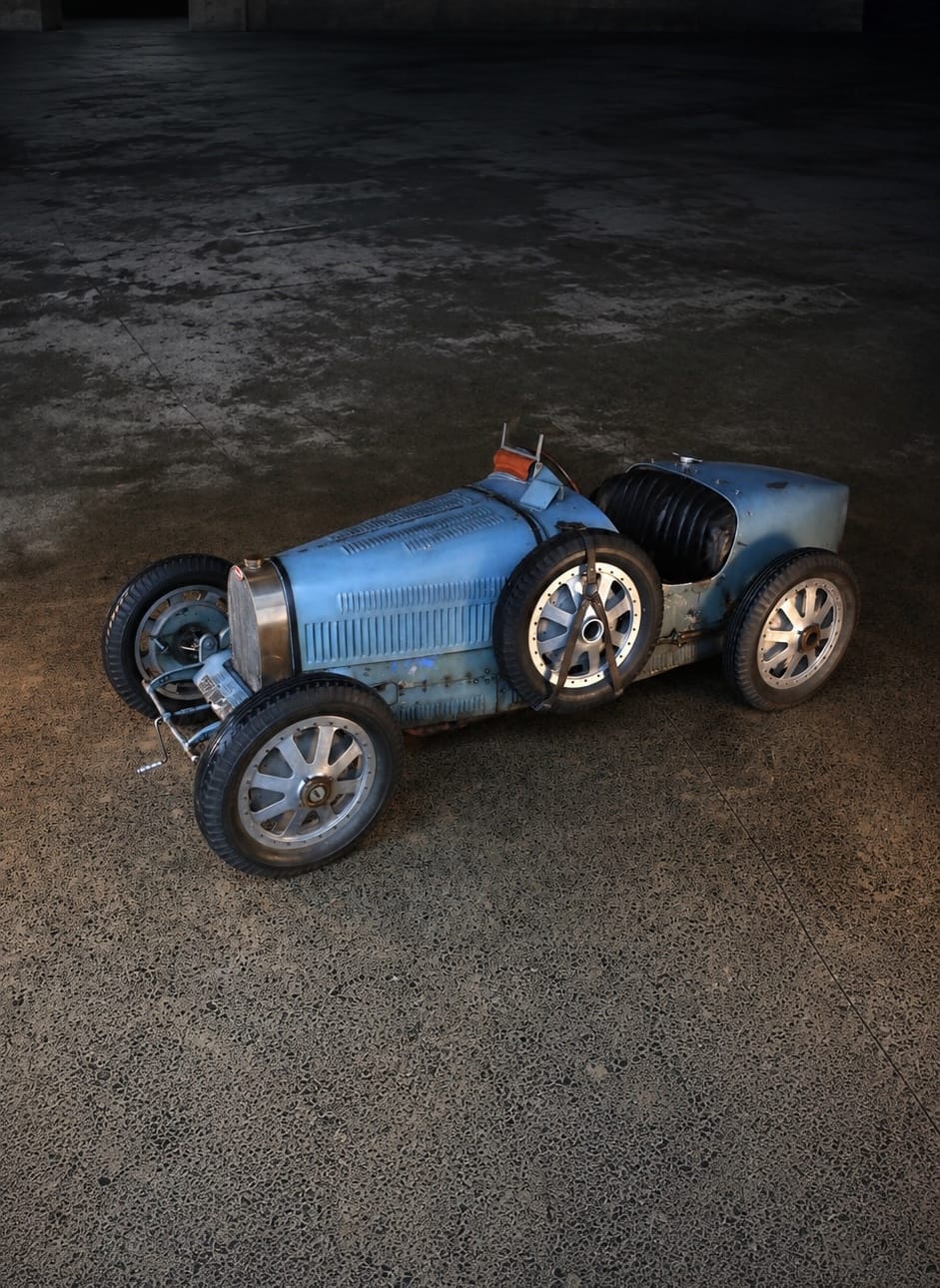
Bugatti 35B - 1928
Collection: “Stiftung Nationales Automuseum, The Loh Collection”
© Dominic Fraser
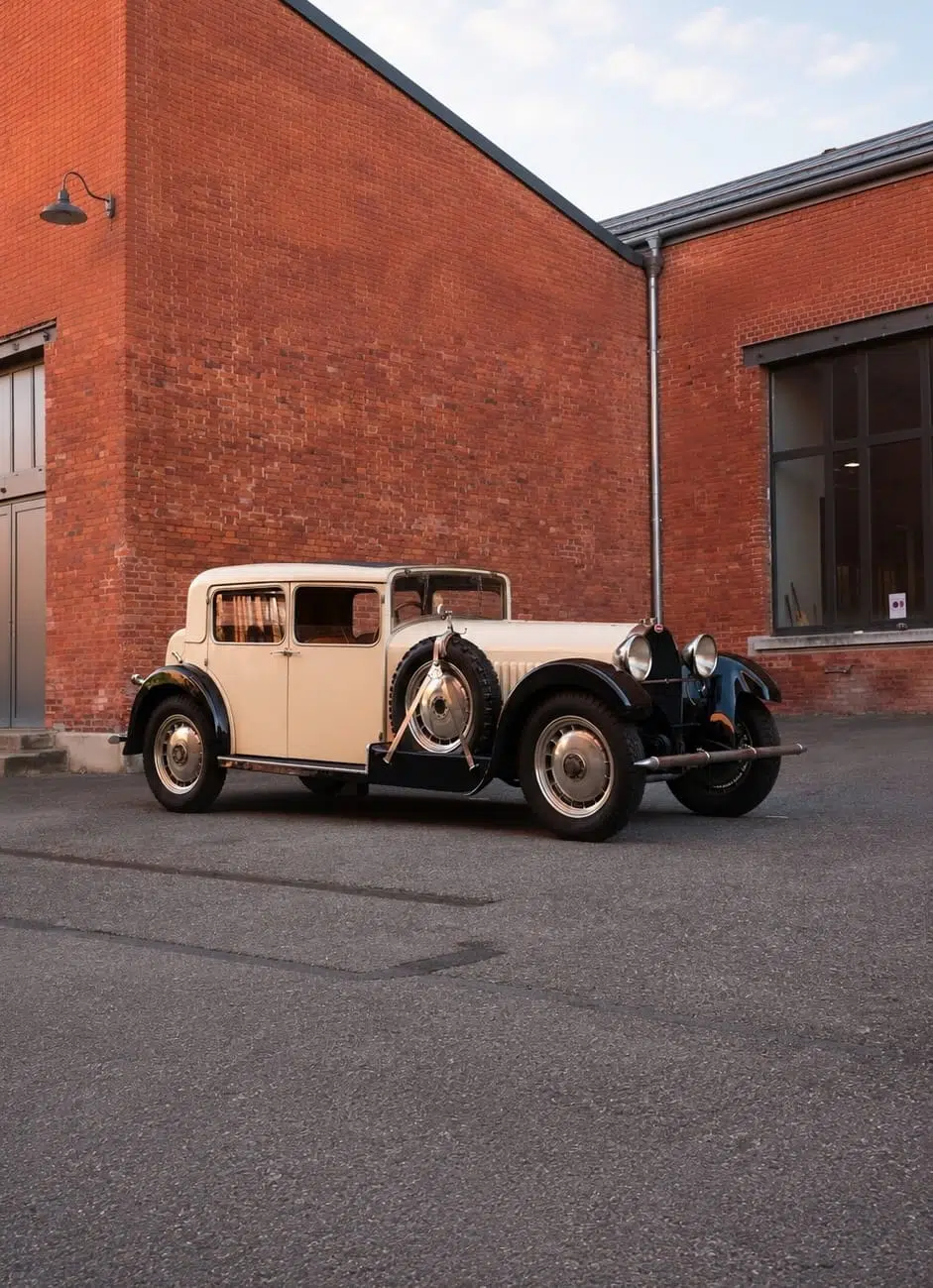
Bugatti 46 - 1931
The Musée National de l’Automobile – Schlumpf Collection
© Xavier de Nombel
Bugatti 46
At the end of the 1920s, buoyed by his success in competition, Ettore Bugatti set out to conquer the ultra-luxury market with the spectacular Type 41 “Royale”. However, the 1929 stock market crash quickly undermined the project: only five cars found buyers, while a sixth example remained with the Bugatti family.
At the same time, the manufacturer developed a more accessible yet still prestigious model: the Type 46, soon nicknamed the “Petite Royale”. This grand tourer stood out for its refined, quiet and powerful engine, incorporating technical solutions derived from racing, such as twin ignition and a crankshaft fitted with a balancing shaft. In 1932, the arrival of the 46 S version, equipped with a Roots supercharger and developing up to 180 hp, gave it remarkable performance.
Among the different versions of the Type 46 was a particularly original body created by the French coachbuilder Million-Guiet. Named “Toutalu”, it was built entirely in aluminium using a process patented by Jean de Vizcaya. Its innovative style was notably characterised by side windows inspired by the railway world, enveloping wings and tubular bumpers.
The example now preserved at the Cité de l’Automobile in Mulhouse was immortalised by photographer André Kertész and took part in the 1932 Monte-Carlo Rally.
Alfa Romeo 158
Designed in 1937 by engineers Gioachino Colombo and Alberto Massimino for Alfa Romeo, the 158, nicknamed “Alfetta” because of its compact dimensions, is one of the most iconic single-seaters in motorsport history. Equipped with a 1.5-litre eight-cylinder engine supercharged by a compressor, it developed close to 200 hp in its post-war versions.
The Alfa Romeo 158 dominated the early years of the Formula 1 World Championship, winning the 1950 and 1951 drivers’ titles with Giuseppe Farina and then Juan Manuel Fangio. During the inaugural 1950 season, the Alfettas immediately asserted themselves by taking a one-two-three finish at the British Grand Prix. In Monaco, however, they faced a new rival: Ferrari, which was then making its debut in the World Championship. Fangio took victory there, while Farina and Luigi Fagioli retired. A fourth 158, used as a reserve car, was also present at the event.
The 1950 Monaco Grand Prix remains famous for one of the most spectacular pile-ups in the history of the discipline. On the first lap, an accident involving several cars partially blocked the track at the Bureau de Tabac corner. Fangio, alerted by the unusual behaviour of the spectators, slowed down in time, avoided the stranded cars and continued on his way to his first victory in the World Championship. At the end of the season, Alfa Romeo monopolised the final podium with Farina, Fangio and Fagioli.
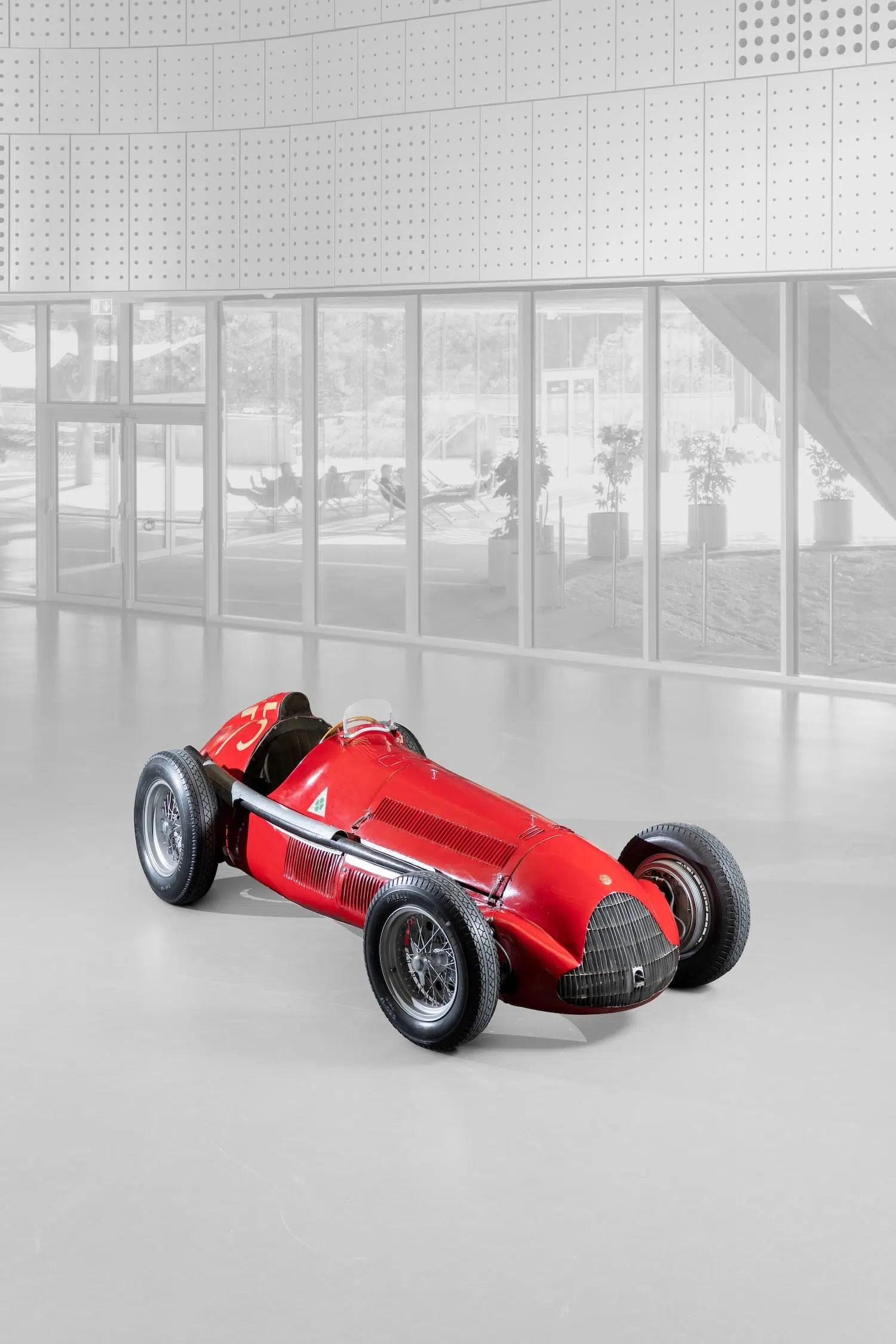
Alfa Romeo 158, Alfetta - 1950
Museo Nazionale dell'Automobile - MAUTO
© photo Bin Jia
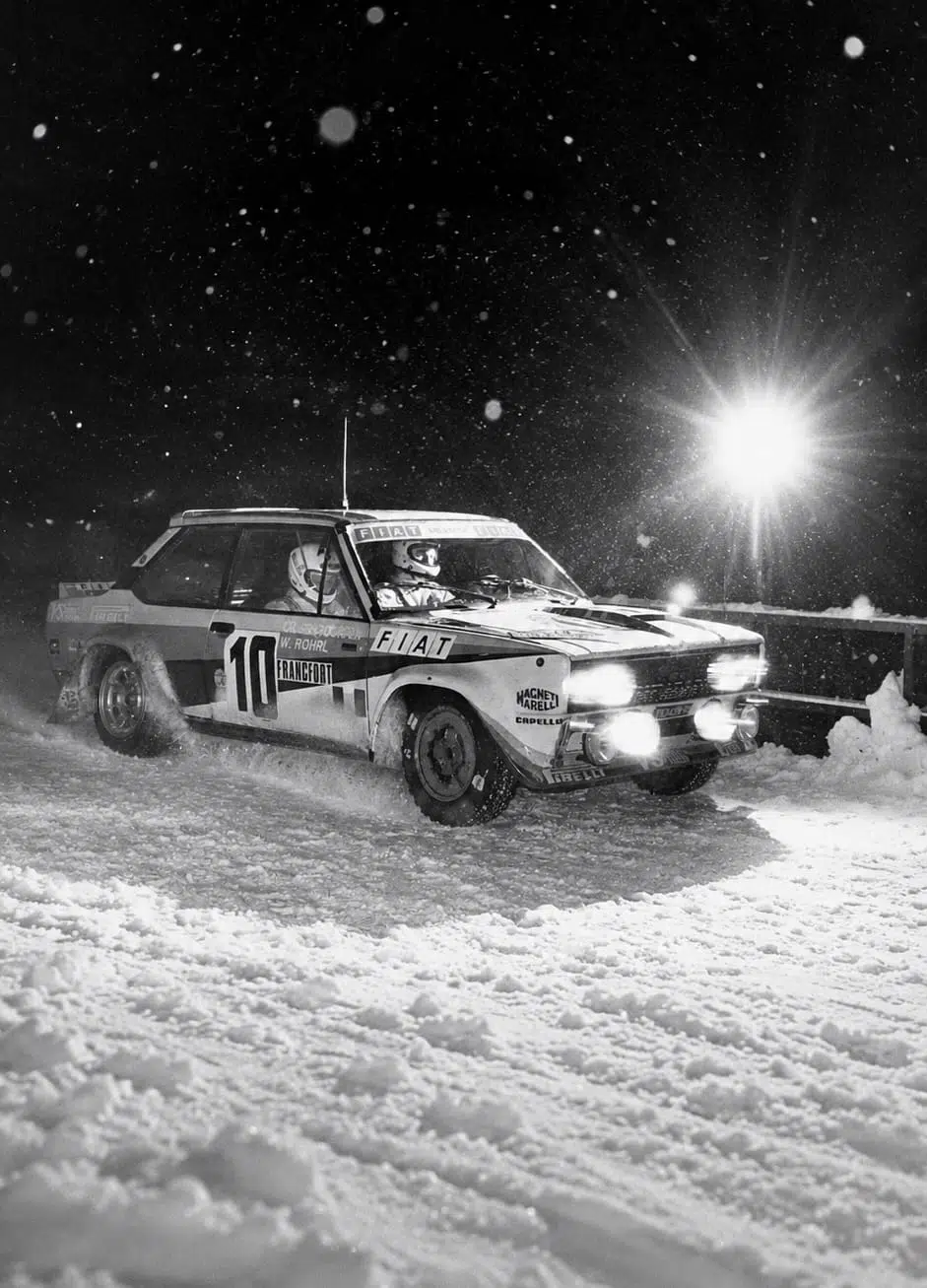
Fiat 131 Abarth - 1980
Walter Röhrl and Christian Geistdörfer in a Fiat 131 during the 1980 Monte-Carlo Rally.
Automobile Club de Monaco archives
© ACM archives
Fiat 131 Rally
For the 1976 World Rally Championship season, Fiat launched the 131 Rally, a heavily modified version of the 131 Mirafiori saloon. This strategic choice allowed the Italian manufacturer to promote a model close to those offered to the general public. Developed with the help of Abarth for the mechanical components and Bertone for the bodywork, the 131 Rally featured a 2-litre engine capable of exceeding 215 hp in competition and a widened design adapted to the demands of rallying.
Presented in 1976 and produced in just 500 examples, the car quickly revealed its potential. After making its debut at the Rallye du Maroc, it claimed its first victory at the 1000 Lakes Rally with Markku Alén and Ilkka Kivimäki. From 1977, benefiting from the gradual withdrawal of the Lancia Stratos, Fiat established itself at the highest level with five victories and secured the manufacturers’ world title ahead of Ford.
Its dominance continued in 1978 with a second world title and Markku Alén’s drivers’ crown. Despite a more difficult 1979 season, the 131 Rally returned to the top in 1980 thanks to Walter Röhrl and Christian Geistdörfer. Winners in Monte-Carlo, Portugal, Argentina and Sanremo, they enabled Fiat to reclaim the manufacturers’ World Rally Championship and confirm the 131 Rally’s place among the most significant models in rallying history.


