Porsche Mission S: a new vision of the sports car
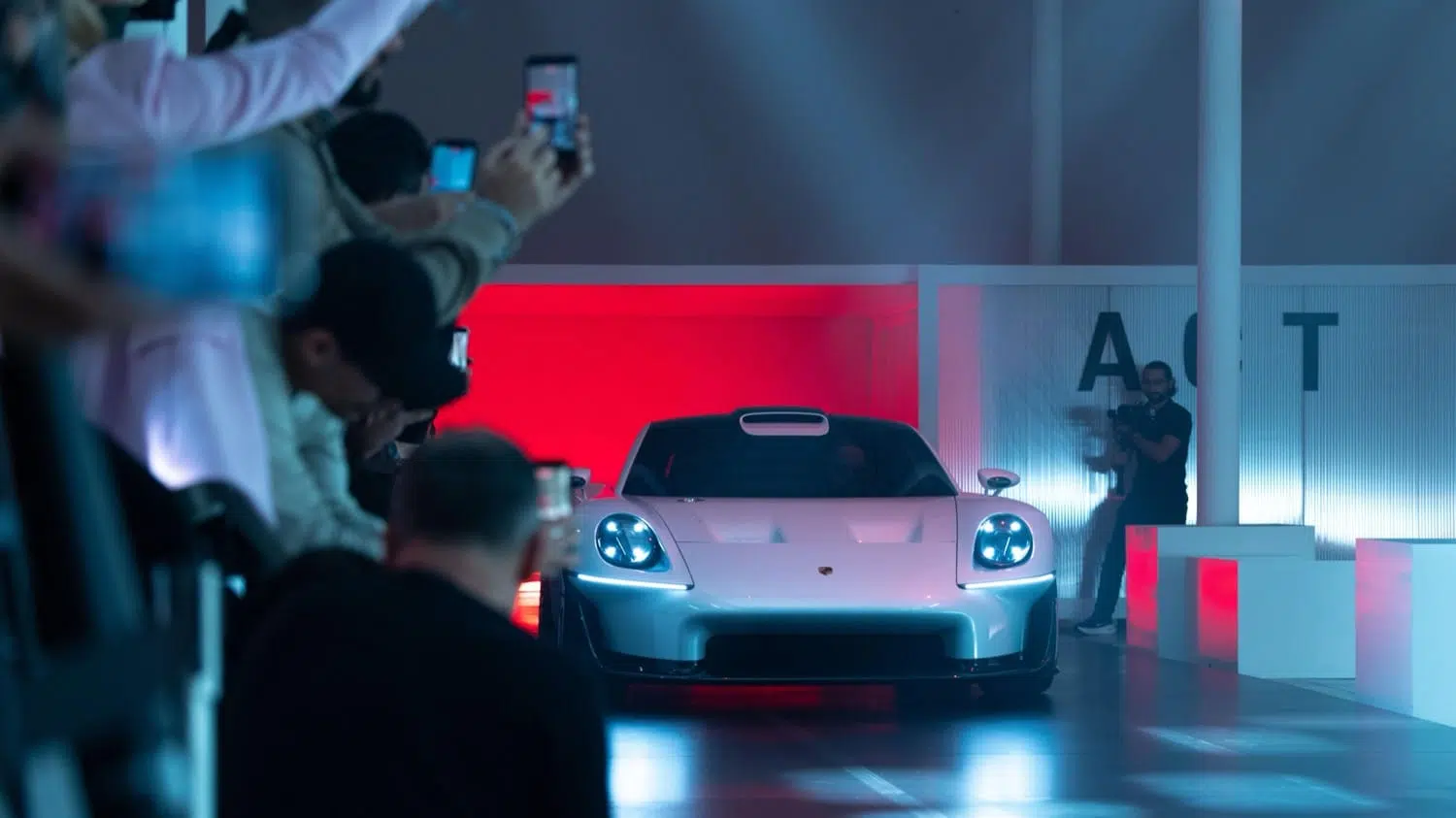
With the Mission S, Porsche is unveiling far more than a concept car: a new design and technological direction that could shape its future sports cars. Presented as a world premiere in New York on 15 October 2026, this mid-engined design study revisits the brand’s historic codes while offering a resolutely modern take on driving pleasure. With its clean design, instrumentation combining analogue and digital elements and driver-focused ergonomics, the Mission S aims to reconnect with the very essence of the sports car. It also heralds the development of a new mid-engined supercar platform, intended to underpin a future range positioned above the legendary 911.
A design that reinterprets the great Porsches of the past
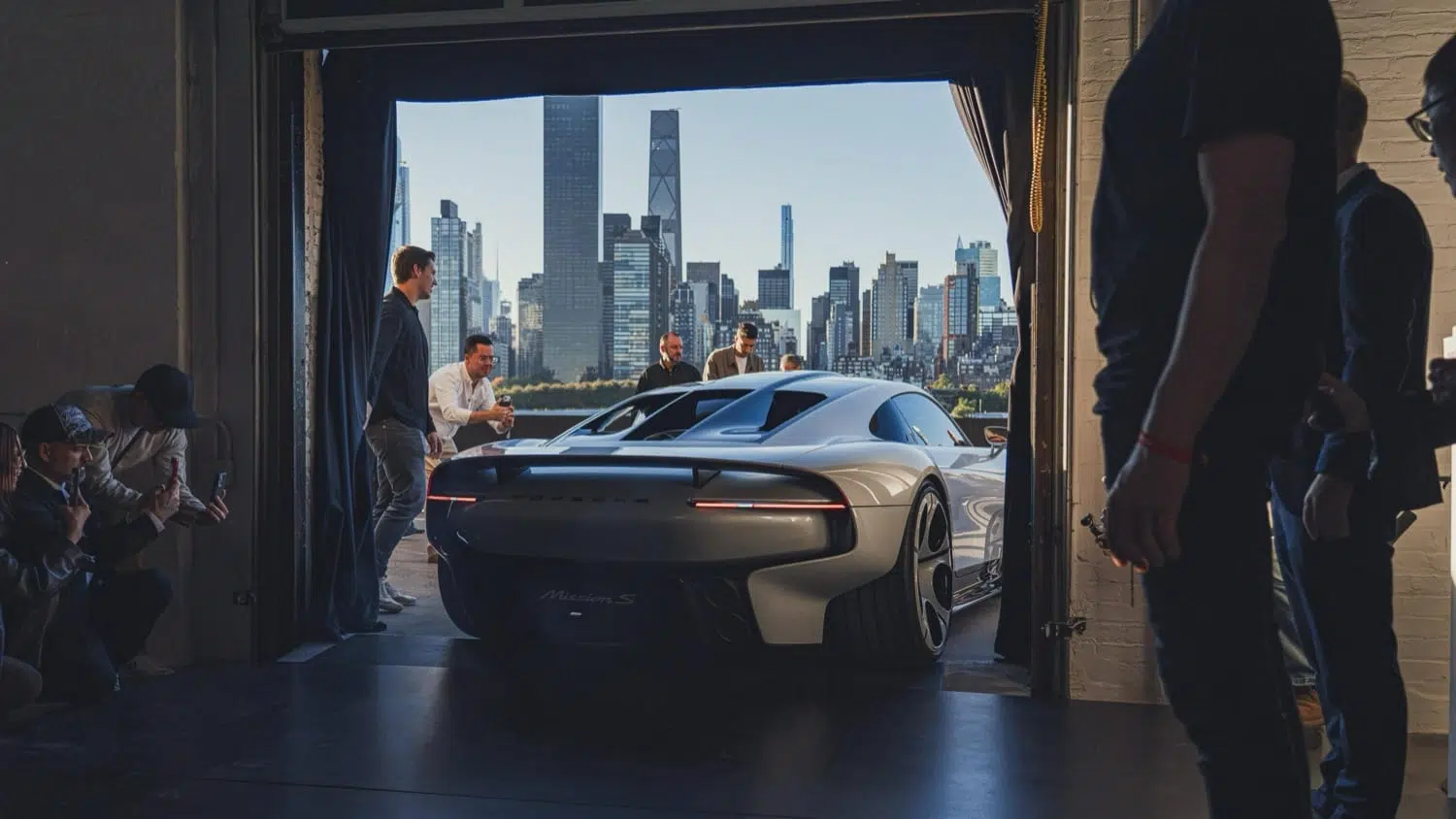
To present the Mission S, Porsche chose a highly symbolic location: a pier in Queens, New York, with Manhattan as a backdrop. It was here, in 1953, that the first Porsche 550 Spyders were photographed, helping to raise the brand’s profile in the United States.
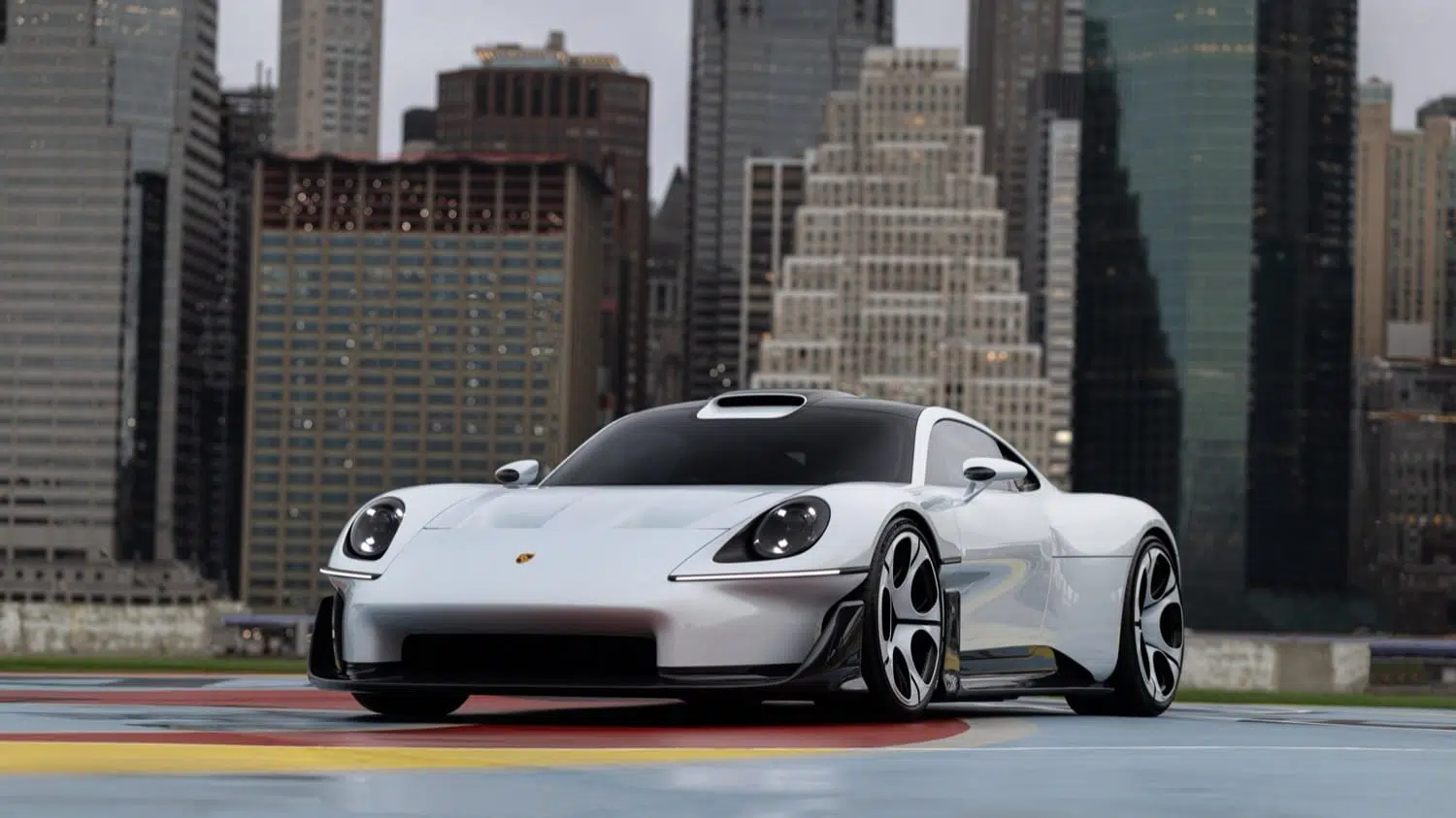
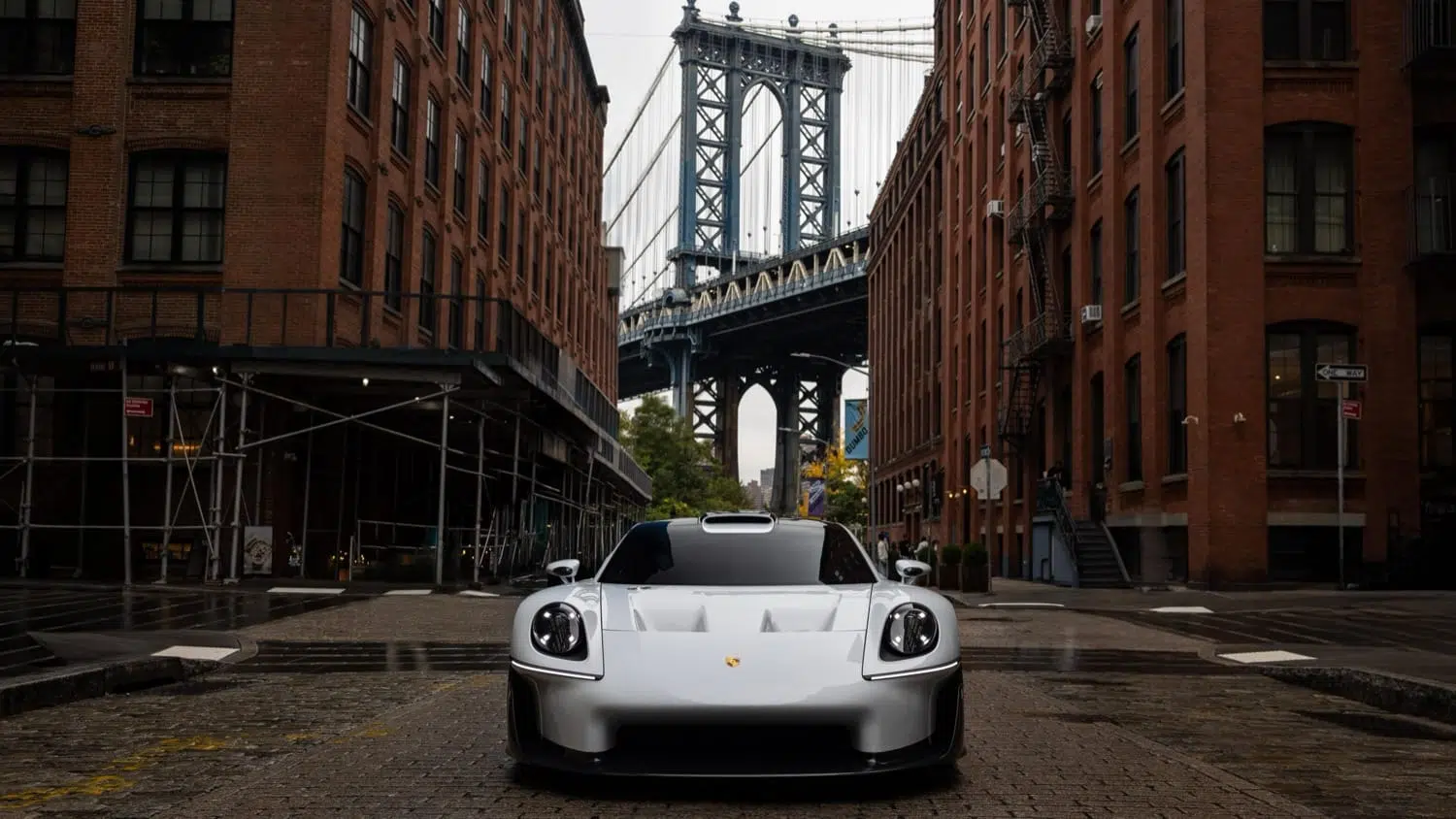
More than 70 years later, the Mission S draws on this heritage to imagine the future of Porsche design. Its low, wide proportions, pronounced front wings and distinctive roofline immediately recall the manufacturer’s iconic models. The round headlights are reminiscent of the 911, the front end takes its inspiration from the 911 GT1, while the roof silhouette references the legendary 959.
The overall design adopts a particularly clean styling language, built around flowing, sculpted surfaces. A continuous line links the front and rear lighting signatures, while the lower volumes highlight the technical elements and the pursuit of lightness.
The Mission S also stands out for several original solutions, such as its active rear wing fully integrated into the bodywork and its wheels inspired by the distinctive design of those on the Porsche 928. At the rear, certain elements adopt the ‘car-in-car’ bodywork concept of the 911 GT1.
Its mid-engined architecture contributes directly to its proportions and visual balance. Porsche has also announced that this study previews a new supercar platform, set to become a lasting addition to its line-up above the 911. This is a significant strategic move, as the aim is not simply to develop an exclusive limited-production hypercar, but an entirely new family of sports cars.
A pared-back cabin that puts the driver back at the heart of the experience
Inside, Porsche takes a particularly interesting direction, moving away from the proliferation of screens that characterises today’s car industry. Inspired in particular by the Porsche 356 and 550 Spyder, the Mission S cabin favours a minimalist layout, physical controls and instrumentation angled directly towards the driver.
The cockpit is built around five circular dials, a clear reference to classic Porsches. In the centre, the rev counter retains an analogue needle combined with a digital display. In a surprising twist, depending on the selected driving mode, this dial can physically move closer to the driver, while the instrument layout changes to prioritise essential information.
This combination of traditional mechanics and modern technology is also found in the dashboard controls, with new push-pull buttons, and in a reinterpretation of the famous Sport Chrono stopwatch.
Another original choice: Porsche has deliberately done away with the permanent central screen and the passenger screen. In their place, a retractable MagSafe-compatible holder allows drivers to use their own smartphone as a navigation or information display. The My Porsche app provides access to the main digital functions and even allows the look of the instruments to be customised with graphics inspired by historic models.
The interior combines white, grey and red tones drawn from the world of Porsche Motorsport, with materials and equipment designed to strengthen the connection between driver and car.
With the Mission S, Porsche thus sets out a vision of the future in which technology must above all serve the driving experience. Although no detailed technical specifications or launch date have yet been announced, this design study offers a first glimpse of what the brand’s future supercars could become: a new generation that aims to combine heritage, innovation and driving pleasure, true to the Porsche philosophy.